

At a recent conference, sipping a mediocre coffee and processing an even more mediocre presentation on AI video, a CEO complained that “AI makes everything look the same.” I asked her what problem this poses for her business. She replied, “To be productive, we need to use AI. To keep our customers, we need to sound more human. Where is the balance?”
Let’s unpack this question. This is a business leader looking to balance human and machine labour. The former creates customer loyalty; the latter lowers costs. The relationship is dynamic — AI capabilities are expanding all the time, but so are human attitudes toward it — so the balance is elusive.
In the end, the question is not about the technology itself. Look closer, and it is about her company’s culture, and how it reacts when AI smashes onto it.
I. The Medium is (still) the Message
Marshall McLuhan’s famous phrase “the medium is the message” continues to resonate. Every new technology expands the limits of our thinking by altering the format of communication. The printing press made content long-form, television made it immediate, the internet made it participatory.
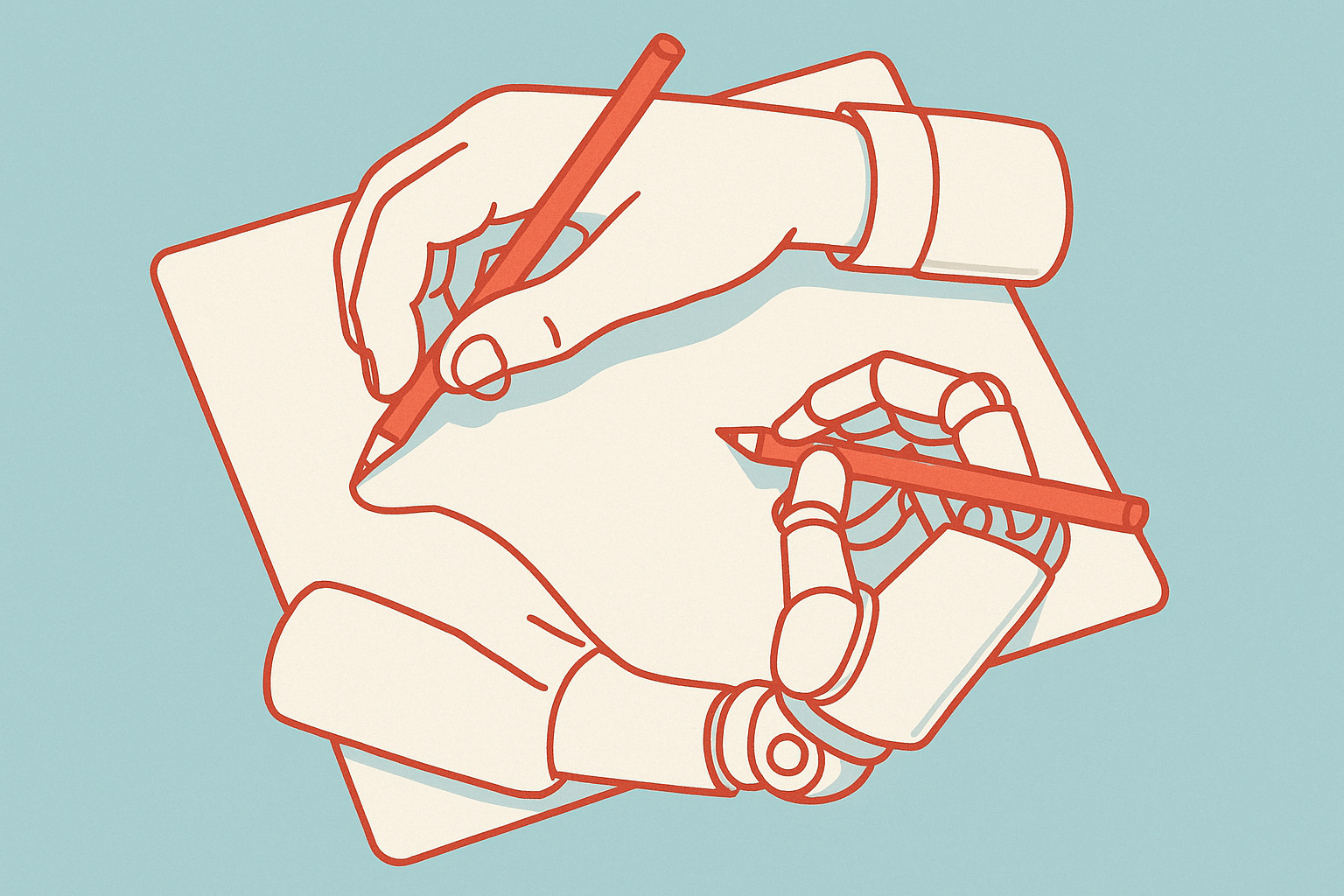
AI takes this one step further: it doesn’t just deliver the message, it creates it. The machine is a co-author, shaping both the texture of the content and the content itself. The question is not only what we say through the medium, but also what the medium says through us.
When we automate content creation, authenticity becomes performative. We remove em dashes, make titles punchier, we spend more time promoting the content than composing it.
The message is not only synthetic, it is also dotted with manufactured sincerity. But surely, there is room for creativity?
II. Do we punish creativity?
The more we use AI, the more its output sounds alike. Styles converge, structure flattens, everything feels a little too polished. This “algorithmic sameness” is not a bug. AI is trained on vast amounts of content, and we accept that it reproduces the average, so long as it delivers at scale.
McLuhan warned that we shape our tools and they, in turn, shape us. If we design tools that promote efficiency, then originality is inefficient. When everyone optimises for speed and efficiency, we start valuing speed over thoughtfulness.
If we treat creativity as inefficient, is it any wonder that everything sounds the same?
III. Making a stand, one prompt at a time
Against this background of algorithmic blandness, human intent becomes more than mere expression. Every prompt is an implicit choice: are we contributing to the noise, or sending out signals intended to connect with someone?
Organisations can’t outsource human connection to their tools. This intent needs to be embedded in how content is created, reviewed and shared. To maintain a human-centric culture, leaders must add reflection in AI-assisted workflows, introduce a degree of creative friction, and reward quality over throughput.
Is this not inefficient? Sure. But when creation is dirt cheap, creativity should command a premium.
IV. The message commissions itself
How can you sound human when a human is not even involved in the process? Agentic AI doesn’t just merely respond to instructions: we assign it a goal and it takes action on our behalf. In McLuhan’s language, the medium isn’t just creating the message, it‘s also commissioning and broadcasting it.
Agentic AI transforms intent from a cultural stance into a design challenge. Values must be “operationalised” and embedded in autonomous systems so that they act in alignment with organisational priorities. Leaders must ensure that accountability and explainability are installed in every AI-enabled system.
More than a regulatory tickbox, ethics must be codified and enforced for all biological or digital employees.
V. You cannot delegate culture
Back at the conference, I told the CEO that the balance she was looking for isn’t between people and machines; it’s between a culture of creativity and one of automation. With the right interventions, AI can make her team more efficient in their jobs and more human in their interactions.
Leaders must drive the debate. Cultural norms shape brand perceptions, team and customer satisfaction. How your team uses AI reflects these norms and offers an opportunity to transform them. This is not something to delegate to HR. This is something to clear a week in your calendar for. What do you do during that week?
Define policy by setting clear principles for when and why AI is used, encouraging both efficiency and creativity
Codify values so they can be operationalised to ensure accountability and transparency by design
Design incentives that promote AI for thinking and exploration and reward creativity over throughput
Assess capabilities and appoint individuals to close gaps, align teams and add urgency to your intervention
Businesses that get this right will build credibility and authenticity against a landscape of synthetic blandness. They will reap the productivity benefits of AI while still sounding human. To do that, leaders must take the time to define the medium before it defines them.