

“Get into computers, kid. Good desk work, plenty of jobs, high salaries”. Over the years, I have both received and given this advice. From web development to mobile and SaaS, the internet revolution has made software development a solid career choice.
Scarcity, however, lowered the barriers to entry. Many people with no engineering talent found jobs by watching a few videos. We kept hiring them because moving buttons 10 pixels to the right was a “critical bug”.

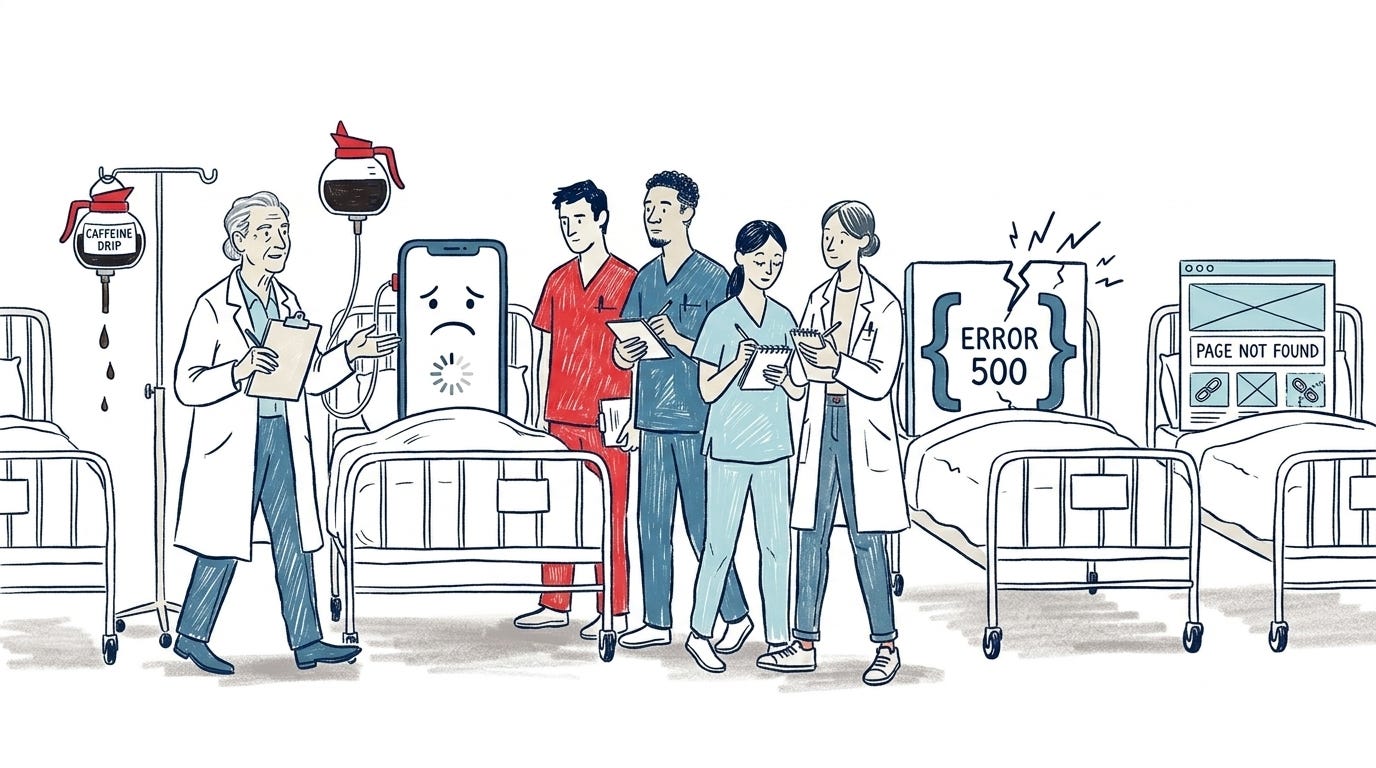
Development will look a lot more like medicine. The low-skill floor will disappear; the high-skill ceiling will rise.
Those days are over, and the profession is about to look a lot more like medicine. The low-skill floor will disappear; the high-skill ceiling will rise.
Talented developers use AI to work faster in smaller teams. Software vendors are under pressure as AI labs pivot to apps, and CTOs adopt a defensive stance amid rising security threats. AI is professionalising development, and businesses that prepare for the new structure will have a meaningful advantage.
Meet the 2030 Dev team
Solution Architects, aka the Medical Directors
Architects will make the critical decisions, design the overall technical framework and hold the team to account. CTOs will fight for them, and many will choose to work for themselves. It will take incredible talent, dedication and decades of experience to reach this stage, but these geek divas will be sought after and paid handsomely.
Software Engineers, aka the Consultants
Engineers will diagnose problems, design solutions within the framework and check the quality of their team’s work. Most of them will specialise, though generalists will remain to interface with the business, as General Practitioners. As credentials matter more, degrees from highly regarded universities will be in high demand.
SecOps Engineers, aka the ER team
The corporate Emergency Room will feel like the Pitt playing in the Star Trek control room. As AI empowers hackers and defenders alike, companies will need to stock up on these indispensable adrenaline junkies. Forget the hooded loners; SecOps will require large, diverse teams that combine sharp brains and sharper language.
DevOps and Support Engineers, aka the Nurses
Doctors diagnose, nurses deliver. DevOps engineers will continue to design and oversee the delivery of technical operations and business support. As data quality and integrity become critical, the team will spend increasing amounts of time maintaining pipelines and integrations. Only the most organised, Ops-oriented engineers will make it in DevOps.
“At the lowest rung of the ladder are the AI code machinists: the only role still working directly with code. “
Coders, aka the Paramedics
At the lowest rung of the ladder are the AI code machinists: the only role still working directly with code. Those with a good track record and interpersonal skills will be in high demand. With only vocational qualifications and low responsibilities, coding will remain a good professional choice. But the opportunities for growth will be limited.
How can businesses prepare
The 2030 Dev team will not manage itself like the current one. The hierarchy is different, the credentials matter more, and the old rules of seniority no longer hold. Three areas where businesses should act now:
1. Tighten up recruitment
Recruiting for developers has traditionally been relatively informal. As AI devalues simple tech assessments and interviews, more emphasis will be given to formal references, degrees and academic achievements. A bit like, you know, other serious professions.
2. Team hierarchy beyond seniority
Your junior Architect will get paid more than your most senior Engineer. During an emergency, SecOps will run the show. You might run a product suite with no full-time coders. As roles within Dev teams diverge, hierarchies cannot be based solely on seniority.
3. Blend Generalists and Specialists
No one health professional can be an expert on all conditions. However, no health system can survive without generalist gatekeepers. For each level in your Dev team, you will need specialists to handle the details and generalists to handle the comms.
Closing thoughts
AI has proven adept at writing and checking code. Whilst talk of a Jobpocalypse or a SaaSpocalypse is overblown, careers in software development will change dramatically.
The job is the judgement, not the output.
Write less code, be more technical, kid.
AI’s impact on a job category depends on which tasks remain after automation takes hold. Spreadsheets devalued bookkeepers’ work, but empowered accountants. Similarly, AI has devalued coders, whilst engineeers remain in higher demand.
The job is the judgement, not the output. If I were thinking of getting into software development now, I would paraphrase Scott Hanselman and advise: “Write less code, be more technical, kid”.
Further reading
1. MindStudio — Anthropic’s Platform Pivot
Anthropic is no longer just a model provider. This article describes the strategic shift toward vertical apps and what it means for SaaS vendors.
2. Financial Times — The Jobpocalypse
The FT’s take on AI and employment provides explains why the reality for developers is more nuanced than the headlines suggest.
3. Forbes — SaaSpocalypse Is Dead
Reports of the SaaS market’s death have been exaggerated, but the pressure on vendors is real. Good background on your overall commercial environment.
4. Stack Overflow — AI vs Gen Z
The data behind the structural shift, told from the inside. Employment for software developers aged 22–25 has fallen nearly 20% from its 2022 peak.
5. Scott Hanselman — On AI-Assisted Coding
Short, pointed, and worth reading in full, the post argues that code assistants mean more technical responsibility, not less.