

To paraphrase a well-known quote, business transformation does not repeat, but it often rhymes.
In this great 2014 article, the author draws a parallel between the emergence of a Chief Digital Officer (CDO) with that of the Chief Electricity Officer in the early 20th century. Like electricity, digital technology evolved from a business function to a utility deployed across the business. As all departments embraced digital technology, CDOs became redundant.
This is a common pattern for emerging, general-purpose technologies. While use cases remain unclear, companies set-up specialised departments to experiment and determine with the new technology. Eventually, these departments are dissolved to spread the know-how throughout the business.
A transformation in two stages
Like its electricity and digital predecessors, AI transformation is following the same two stage pattern.
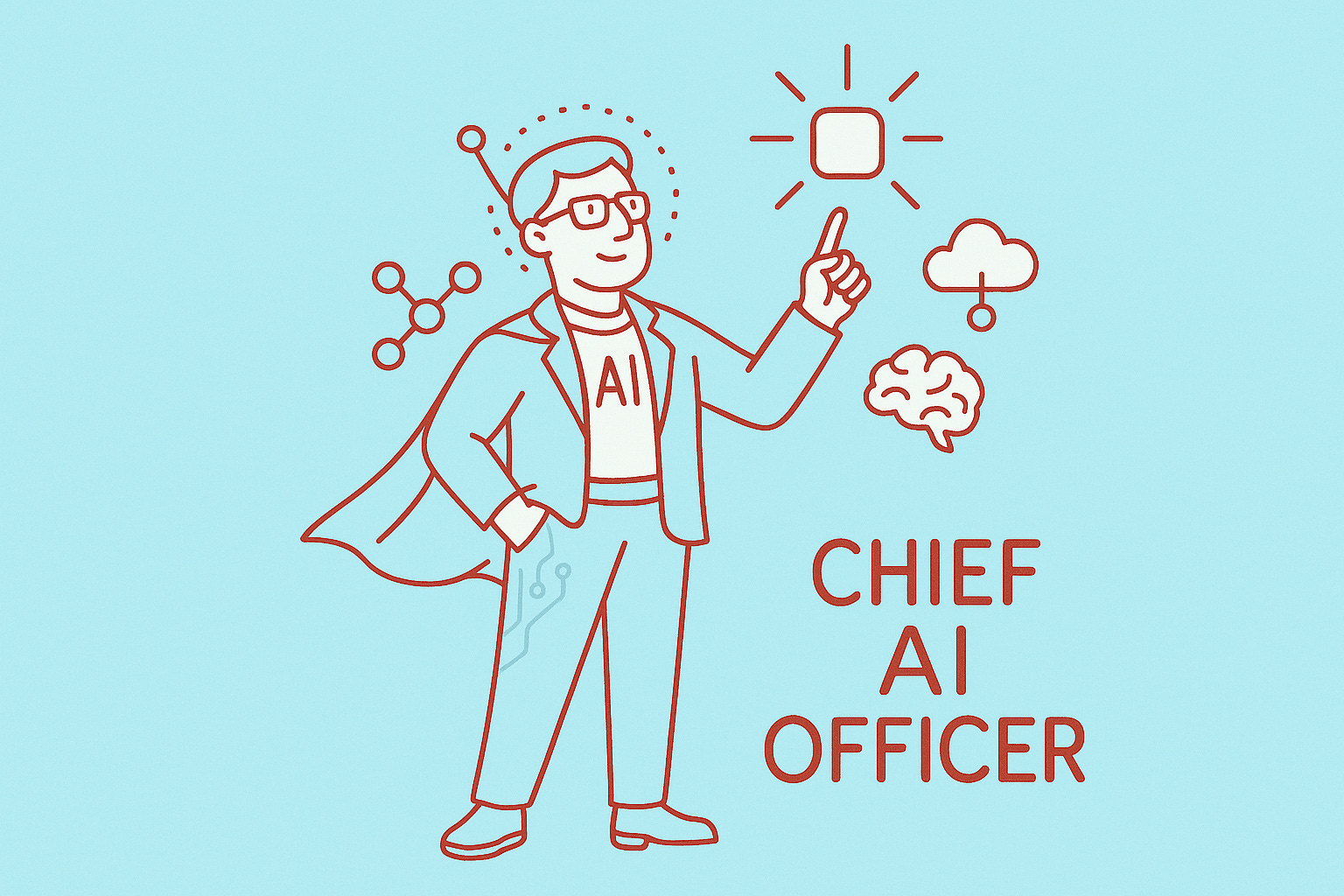
In the current first stage, AI champions are starting to appear. As executives take notice, Chief AI Officers will emerge, overseeing departments tasked with implementing “cross-silo” AI capabilities. This is the internal transformation stage, aiming to improve workflows.
In the second stage, AI tools and skills will specialise by business function. Over time, AI departments will be broken up and distributed to the various business functions. New products will emerge, triggering external-facing transformation and business renewal.
AI transformation will come fast - but not that fast
Electricity took some 50-60 to reach widespread industrial adoption, and the internet about half that time. Although AI is likely the fastest tech to reach ubiquity for consumers, business diffusion will take a little longer, reaching maturity towards the end of the decade.
This delay is not a bug, it’s a feature. Companies must align not just their individuals but also their formal interactions. Strategic thinking weighs risks as much as it seeks to exploit opportunities. Unlike consumers, firms are the target of regulations, not the beneficiaries.
For multiple reasons, AI transformation will take time. It will not be a repeat of the digital transformation, but it will surely rhyme.