

Every profession likes to project an image of itself through its working environment. Finance types scream at each other on trading floors; programmers huddle in dark corners surrounded by monitors. Lawyers like an oak-panelled office with leather chairs, no doubt to communicate their command of the holy scriptures that comprise the “Law”.
I recently visited a law firm to settle some company matters. The decor did not surprise, but the attitude did. I went to the meeting prepared: I had my AI summarise the drafts and pick out clauses that seemed unusual or one-sided. I was also prepared for the weary sigh that greets a client who has done his homework with AI.
The sigh never came. The lawyer went straight to the nuances, explained the areas of concern and raised some the AI had missed. She assumed I had used AI and offered suggestions on how I might use it more effectively next time.
That meeting captures a shift in knowledge work. Clients arrive informed, and companies need professionals with high AI fluency. As the value of expertise shifts from knowledge to judgment, the expert’s job description is being rewritten.
Key idea
AI now mediates the expert-client conversation, working on both sides of the table. Modern expertise is delivered by professionals who contextualise, personalise, supervise, challenge and reframe. They also tinker with the tools themselves, supervising AI agents and vibe-coding the odd utility or prototype.
AI on both sides of the table
Expert-client relationships have long rested on knowledge asymmetry. Lawyers, doctors and consultants own the Knowledge, and the client pays to access it. The asymmetry is protected by status and communicated through credentials and command of jargon.
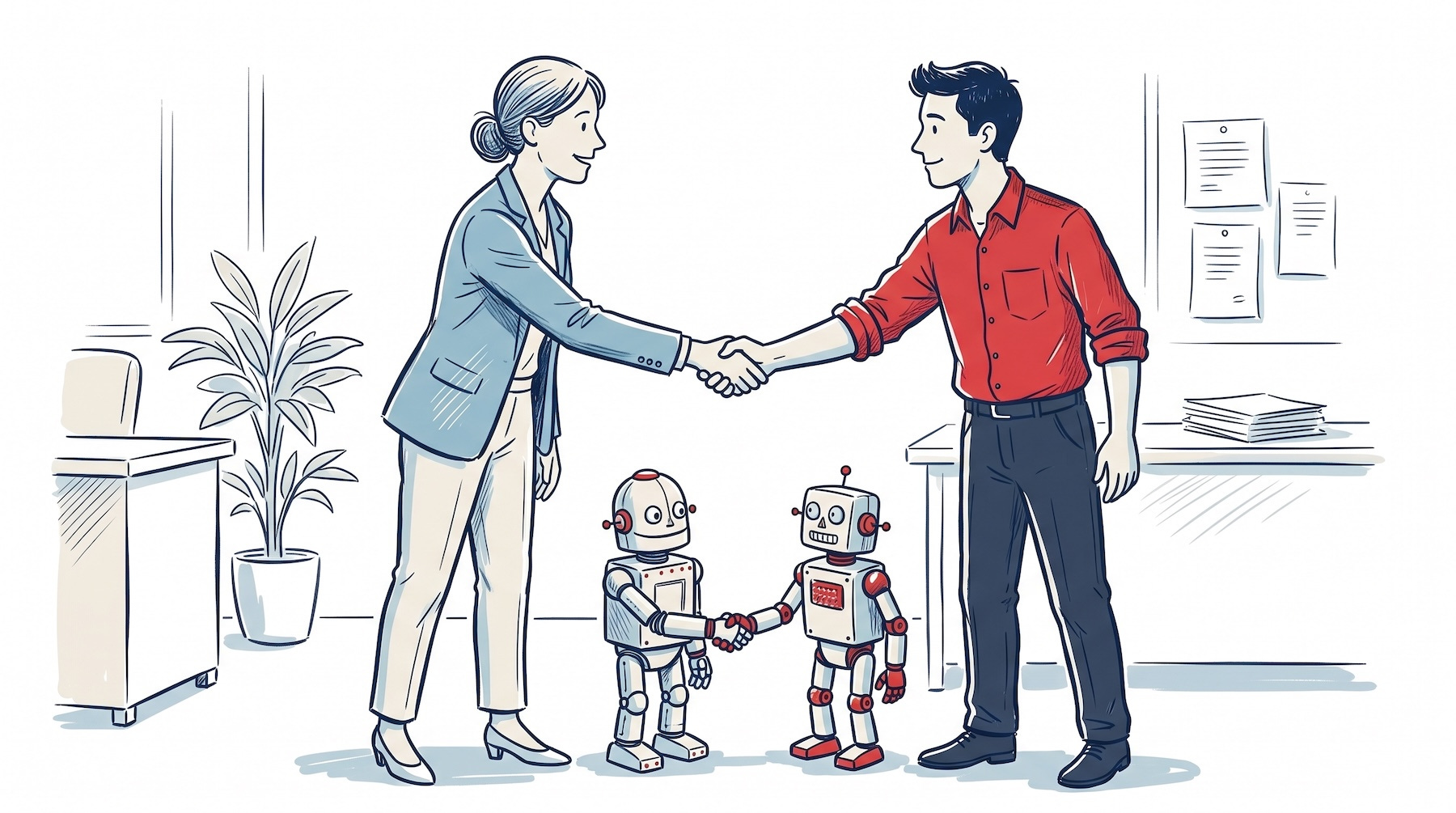
AI has narrowed the gap from the client’s side. A patient can get an instant second opinion on a diagnosis, the deference to their doctor replaced with informed questions. The doctor’s side has changed too, and they need to use AI to defend the diagnosis rather than just present it. The conversation remains between two people, but AI enables both parties to converse at a higher level.
Treating a client’s AI research as an impertinence comes across as defensive. Professionals who flinch at an informed client are signalling they would rather hide behind status symbols than offer true expertise.
The new expert
The new expert expects clients to arrive informed and treats a “little learning” less as a dangerous thing than as a starting point. Experts must be open to explaining their thinking and merging their advice with the AI output by focusing on five things:
They contextualise, fitting a generic AI answer to the specific situation, jurisdiction or market.
They personalise, fitting it to the client’s profile, appetite for risk and circumstances.
They supervise, checking for inaccuracies and omissions as they would with a junior’s draft.
They challenge, applying judgement and scepticism to push back on the client’s AI as well as their own.
They reframe, helping the client see the challenge and explore solutions from a different perspective.
Teams built around these foundations will look different. The classic pyramid gradually shifts to a diamond, with a narrower base of junior roles and a wider middle of mid- and senior positions, a trend observed in software development. To help train juniors, managers might learn from the way hospitals train junior doctors, who follow seniors on ward rounds and earn autonomy as their skills develop.
Expert tinkerers
A colleague recently described an SEO expert as someone charged with “supervising AI agents and communicating with clients”. Agents handle much of the keyword research, drafting and reporting. The expert sets them to work, checks what comes back and turns it into actionable advice.
The new experts are not afraid to tinker with the tools. As coding becomes automated, every expert is expected to vibe-code a little: a utility that automates a repetitive task, a rough prototype that shows a client what a solution might look like. No one expects their accountants to write software, but one would not need to call the “techies” to convert a report from one format to another.
Tinkering also sharpens judgment and serves as a strong signal of AI fluency. “Prompt engineering” is about as useful as “proficient in Microsoft Word”, but a vibe-coded Excel widget shows curiosity and promise.
The mark of a true expert
As the outline of the AI-enabled workplace comes into view, concern is giving way to hope. OECD employment sits at a record high. The mass white-collar unemployment some AI leaders predicted has yet to arrive, though entry-level work is under pressure.
As AI becomes as ubiquitous as email, jobs are not disappearing but are changing. The cliché has evolved with adoption: AI will not take your job; neither will someone using AI. But if you are uncomfortable with your clients using AI, then you are in trouble.
AI has shrunk the expert-client knowledge gap, and my lawyer was fine with that. She expected me to come prepared, and I expect the same of her. That is the mark of a true expert, and I will be going back.
Further reading
OECD job markets remain strong but real wages are lagging (OECD) – the job resilience data
From diagnoses to treatments, why Americans use AI chatbots for health (Pew Research Center) – patients arriving with a second opinion
More than 80% of physicians use AI professionally (AMA) – the experts are catching up to AI
IT hiring sees a boost as software development jobs slowly bounce back (CIO) – the shift from pyramid to diamond
Does generative AI save time at work? (FRED Blog) – how far AI still has to go before it is as ubiquitous as email
Frequency of AI use at work (Statista, on PwC’s Hopes and Fears survey) – why agent supervisors remain a scarce breed